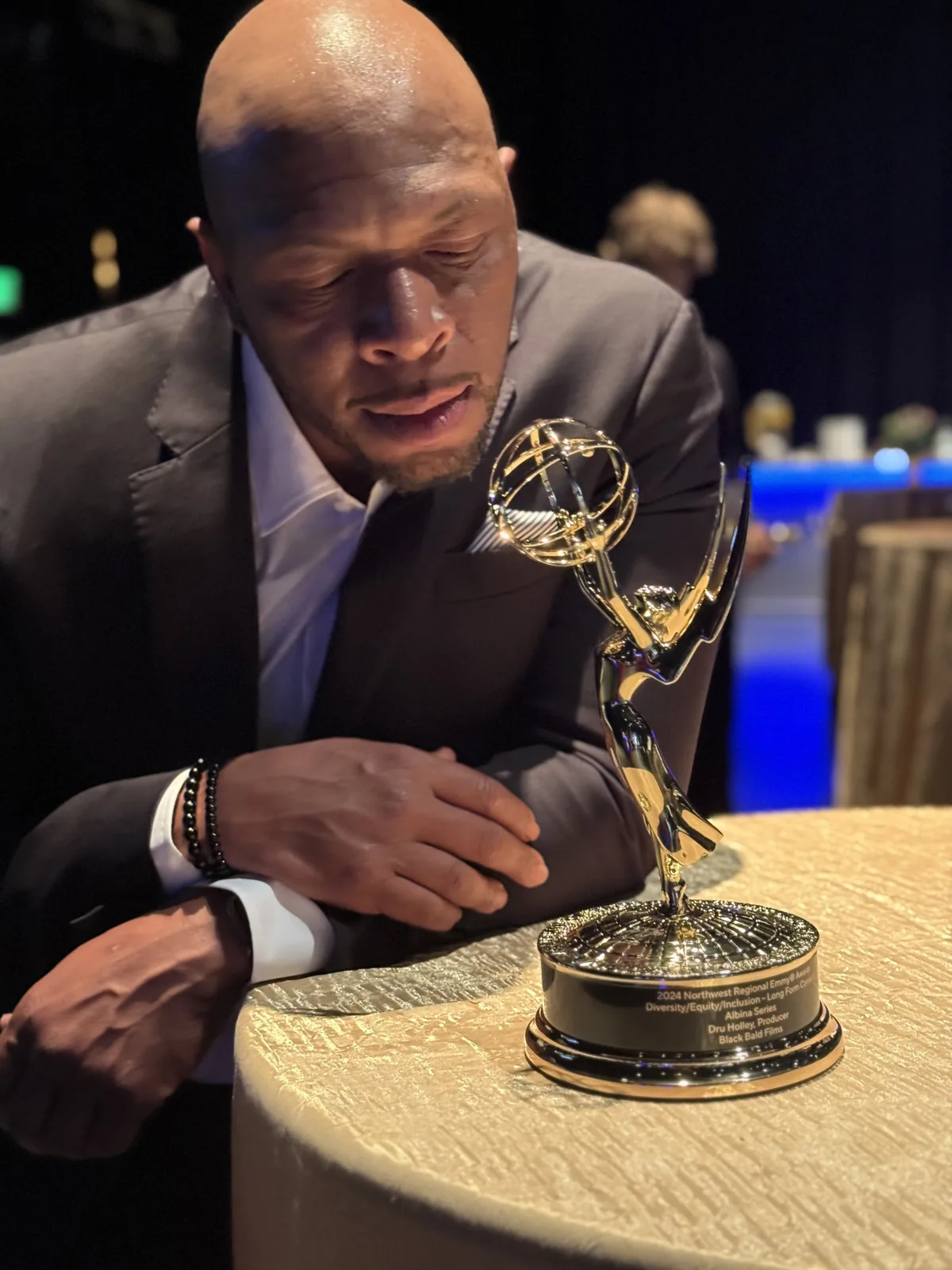
Producer’s Statement — Dru Holley
When I was making Buffalo Soldiers: Fighting on Two Fronts, there was something I kept hearing that bothered me.
“Why didn’t I learn about this in school?”
I hated hearing that. Not because people were asking the question, but because of what it represented.
First, I never liked the idea that we have to depend on somebody else to teach us our own history. These are our stories. We should be telling them, documenting them, and passing them down ourselves.
Second, history is often written by the victors. The people who control the narrative get to decide what gets remembered, what gets left out, and sometimes what gets erased altogether.
That has always stayed with me as a filmmaker.
I’ve spent years telling stories about Black history, from the Buffalo Soldiers to Portland’s Albina community. Those stories matter. But I started asking myself something: Why do we always have to look backward? Why can’t we celebrate the people making history right now?
Portland is an amazing place. One of the things I’ve always loved about this city is its willingness to try something different. You can come here with an idea that might sound crazy somewhere else, and people will give it a shot. You could be a Black man making kombucha with your own unique flavors, and people would line up because they’re curious about what you’ve created.
That’s Portland. It’s creative. It’s experimental. It’s a place where people aren’t afraid to try something new.
I’ve watched this city become one of the most celebrated food destinations in America. And I understand why. There’s an energy here that allows people to experiment, take chances, and create something entirely their own.
But here’s what bothered me.
When I looked at the stories being told about Portland’s food scene, I didn’t always see the Black chefs, farmers, restaurant owners, and entrepreneurs who were part of that creativity.
And I knew they were here.
Portland has a complicated history when it comes to its Black community. I’ve documented parts of that history. But that history doesn’t tell the whole story of Black life here, and it certainly doesn’t define everything Black people are doing today.
I wanted to show another side.
Black people creating. Black people experimenting. Building businesses. Taking chances. Bringing their own flavors and traditions into a city that’s willing to try something different.
I wanted to show the humor, the personalities, the food, the families, and the joy.
And I didn’t want to wait another 20 or 30 years for somebody to rediscover those stories and wonder why nobody documented them.
That’s where Taste Black Portland began.
I also wanted Black people around the country and around the world to know something: Portland has a Black community. We have culture here. We have incredible food here. There are people doing amazing things, and I want you to come experience it for yourself.
I brought my friend Jared Leaf into this project because I believed in his talent and wanted him to help tell these stories.
As Jared traveled through Portland’s Black kitchens, something unexpected began to happen. Many of the flavors and traditions he experienced weren’t a regular part of his upbringing. The journey started connecting him to parts of his own family history, and the documentary became personal in a way neither of us had originally planned.
That’s what I love about documentary filmmaking. You can start with one idea, but if you’re paying attention, the story will tell you where it needs to go.
For me, the mission has never changed.
Our stories deserve to be told by us, while we’re here to tell them. Our history matters, but so does our present. So does our creativity, our joy, and the legacy we’re building for the next generation.
Taste Black Portland is a celebration of that. It’s about the people making this city what it is today.
And it’s an invitation to the rest of the world to come see what we’ve got.
Food is the vehicle. Portland is the world. Home is the destination.